DMart’s Operating Costs Edge Up 7%
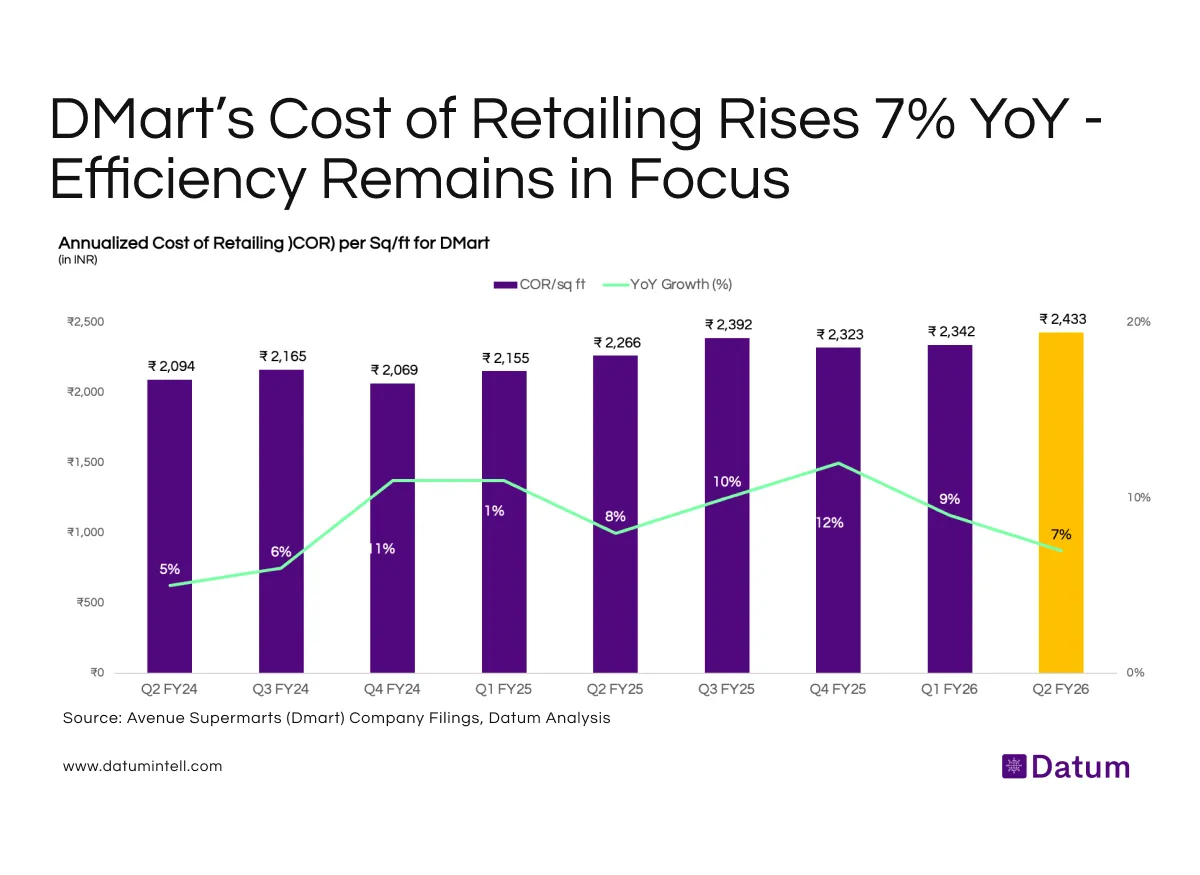
DMart’s cost of retailing per sq. ft rose 7% YoY to ₹2,433 in Q2 FY26, signaling inflationary headwinds but strong cost discipline.
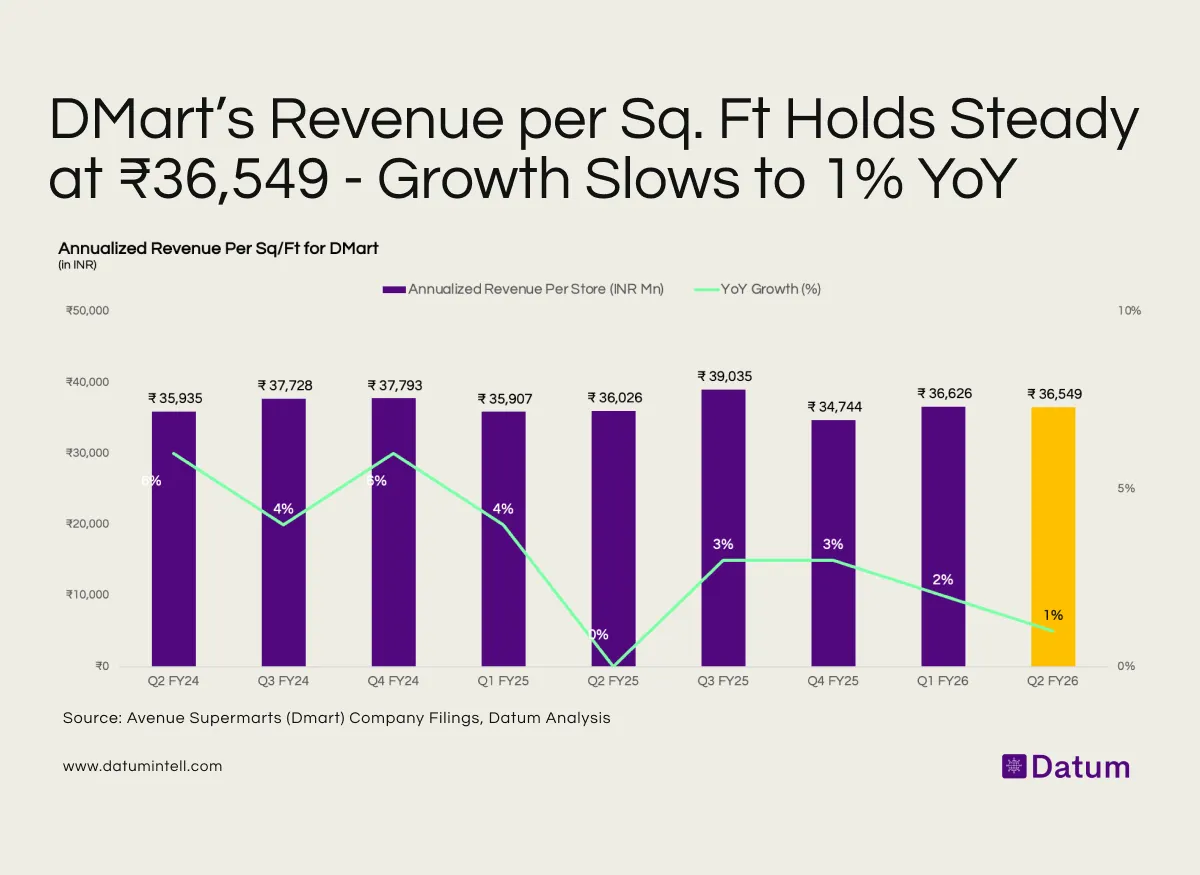
DMart’s sales per sq. ft held firm at ₹36,549 in Q2 FY26, with just 1% YoY growth. The plateau signals a shift toward operational efficiency and profitability management as India’s value retail market stabilizes.
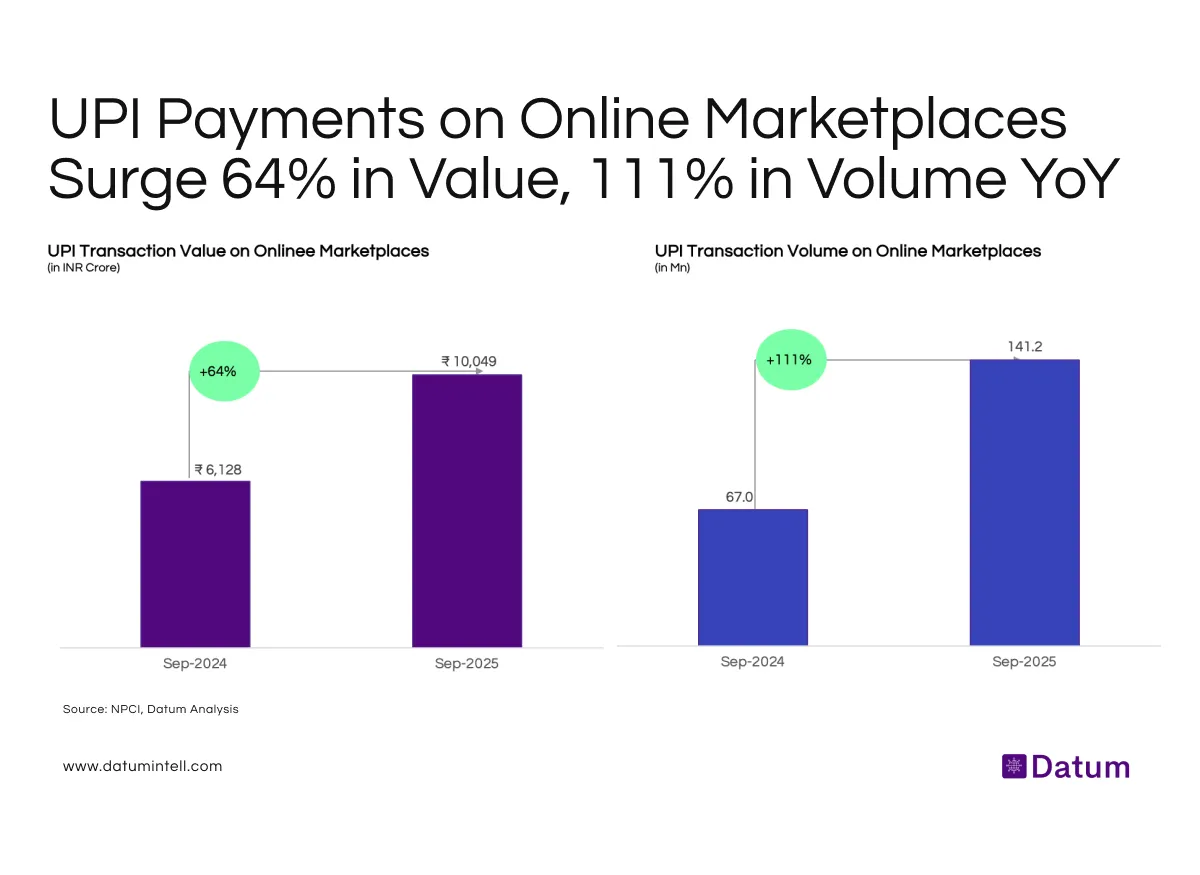
UPI payments on online marketplaces hit ₹10,000 crore in Sept 2025 - up 64% in value and 111% in transaction volume YoY. The surge reflects India’s expanding digital spending power, as millions of consumers turn to UPI for everyday and high-value online purchases.
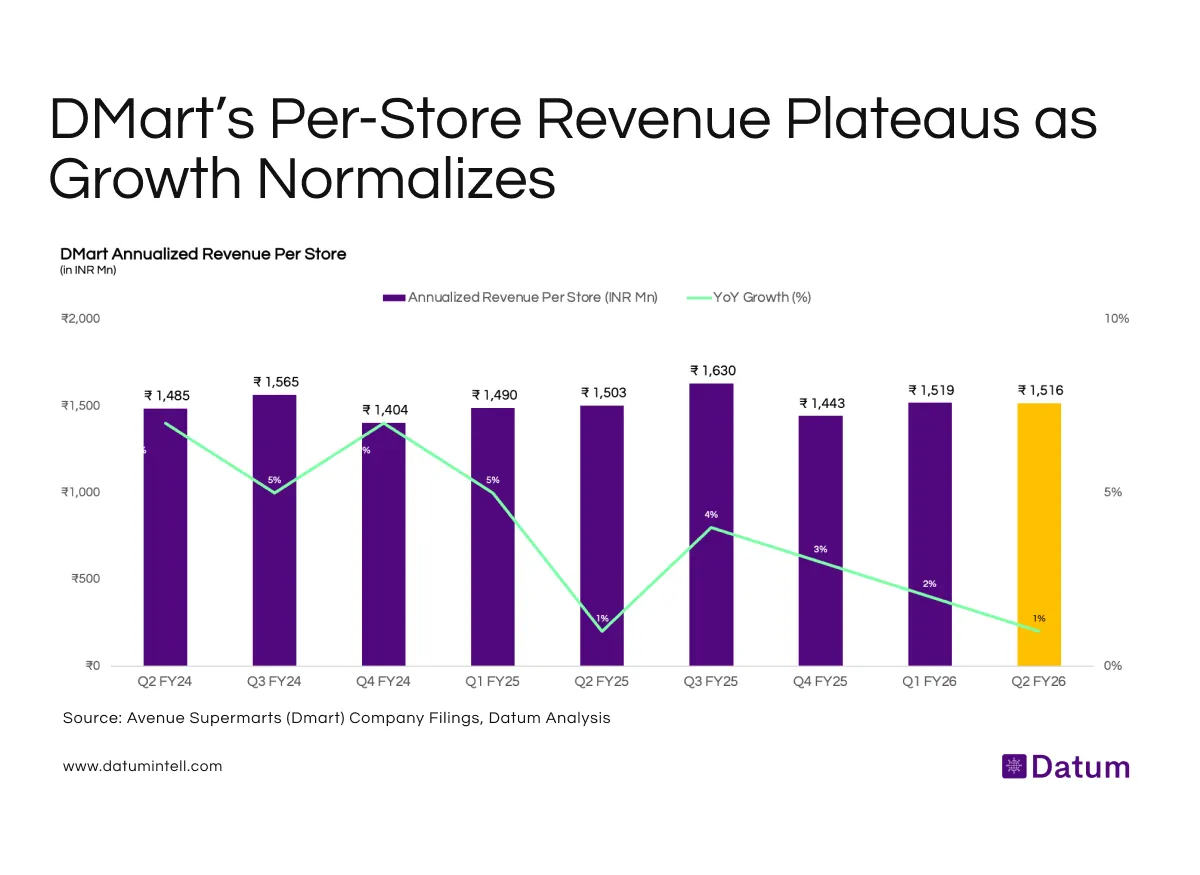
DMart’s per-store revenue held steady at ₹1,516 million in Q2 FY26, with YoY growth slipping to just 1%. As consumer demand normalizes, the retailer’s focus is shifting from expansion to same-store efficiency, category mix, and margin improvement to sustain profitability.
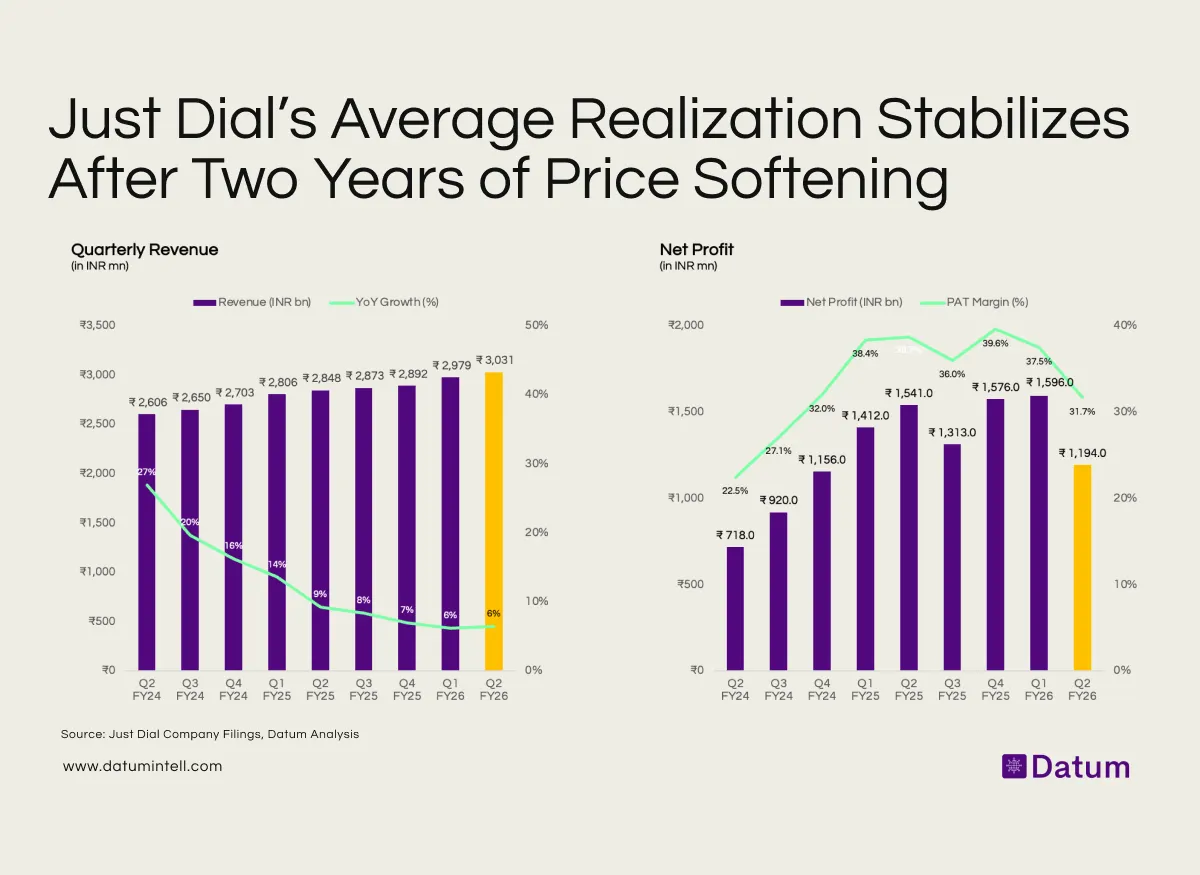
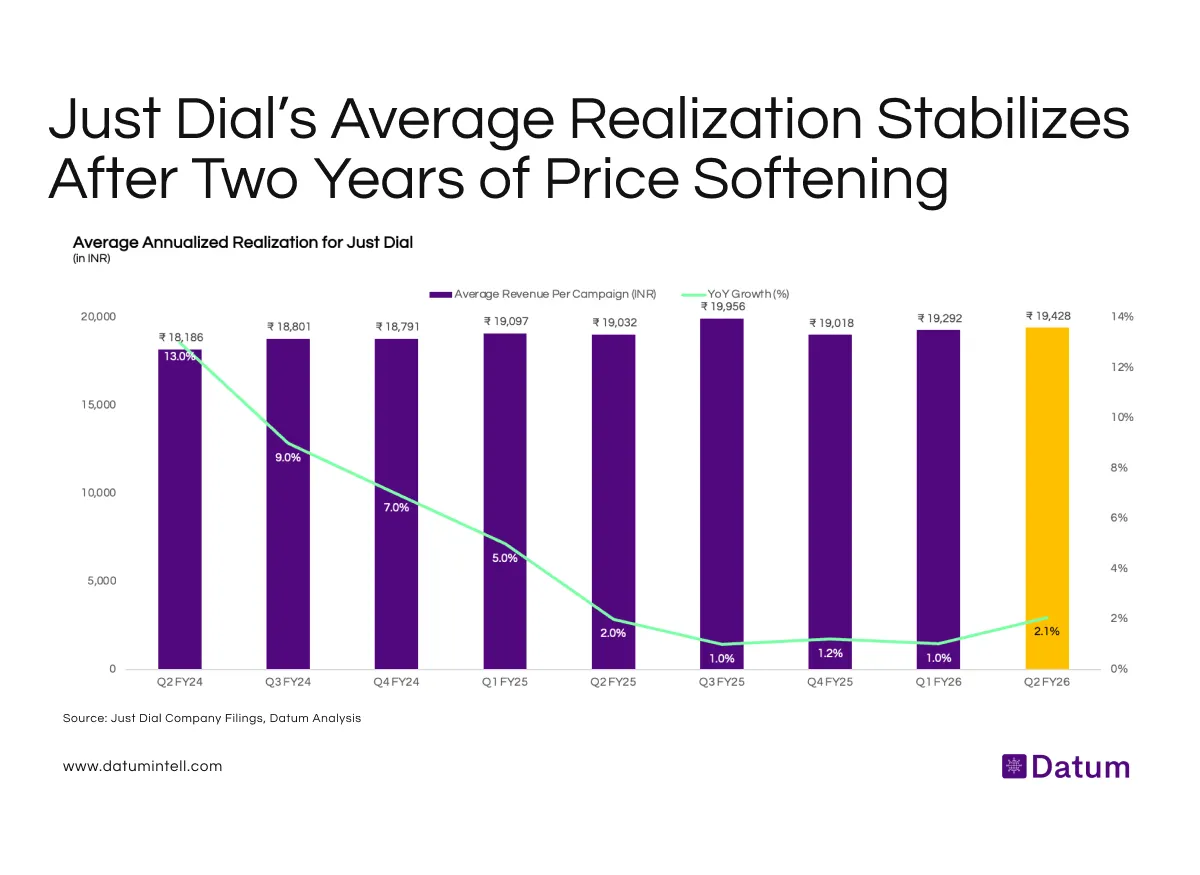
Just Dial’s monetization per advertiser has stabilized around ₹19,000 after a prolonged decline - signaling pricing equilibrium but also highlighting limited headroom for yield-led growth.
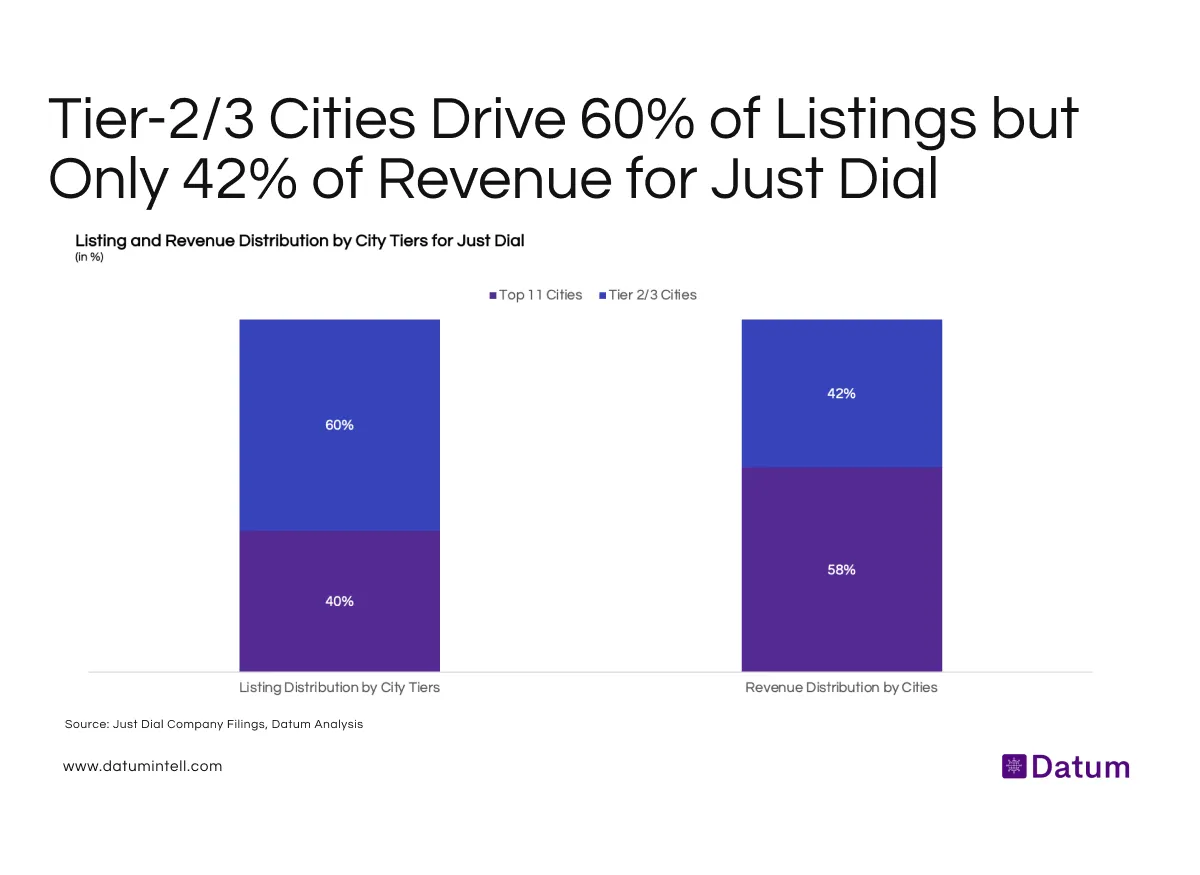
While 60% of Just Dial’s listings now come from Tier-2/3 cities, these smaller markets contribute only 42% of revenue - a clear sign that monetization is yet to catch up with reach. The platform’s growth engine lies beyond metros, but its earnings still lean urban.
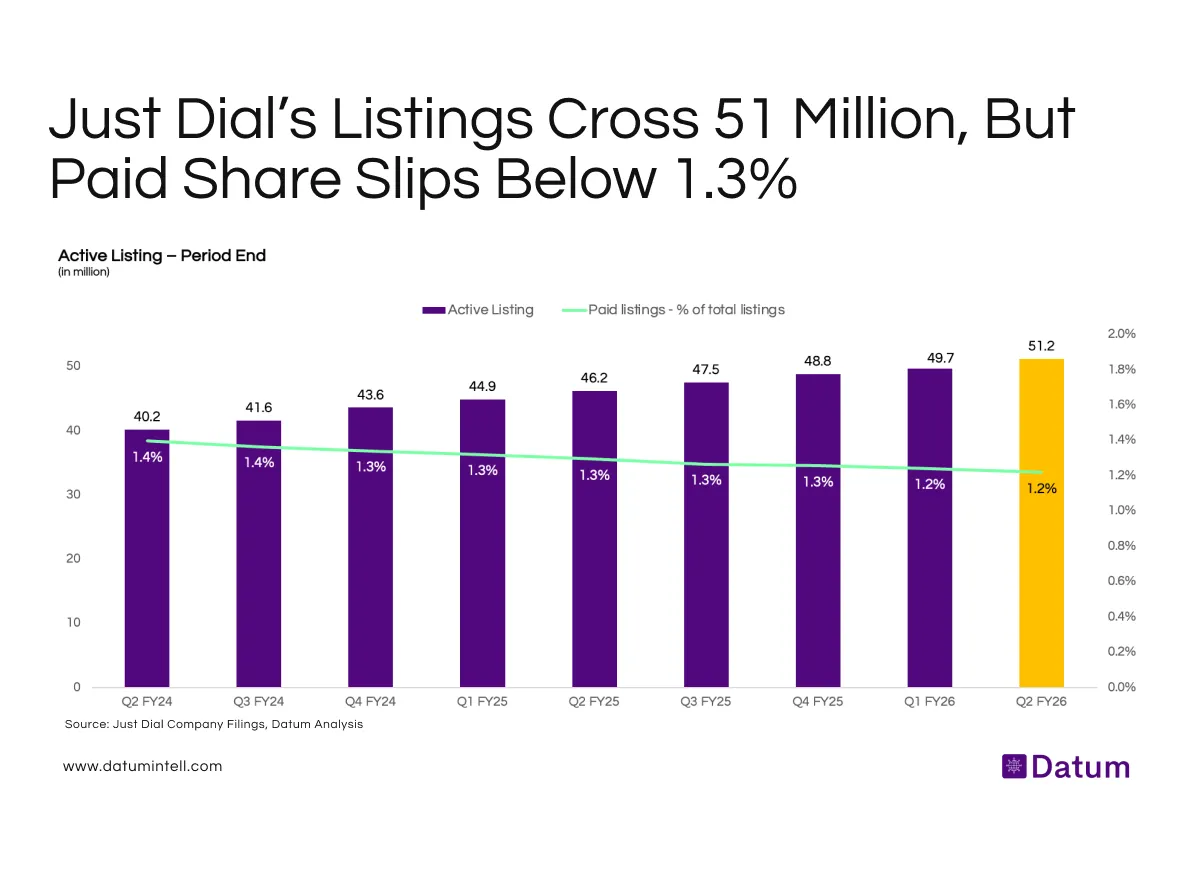
Just Dial’s listings surged past 51 million in Q2 FY26 - its highest ever - but the monetization rate continues to soften, with paid listings now only 1.2% of total. The platform’s reach is widening, but revenue growth increasingly hinges on better conversion rather than scale alone.
Just Dial’s Q2 FY26 marks a shift toward steady, efficiency-led growth - with stable revenues, rising realizations, and deeper Tier-2 market momentum.
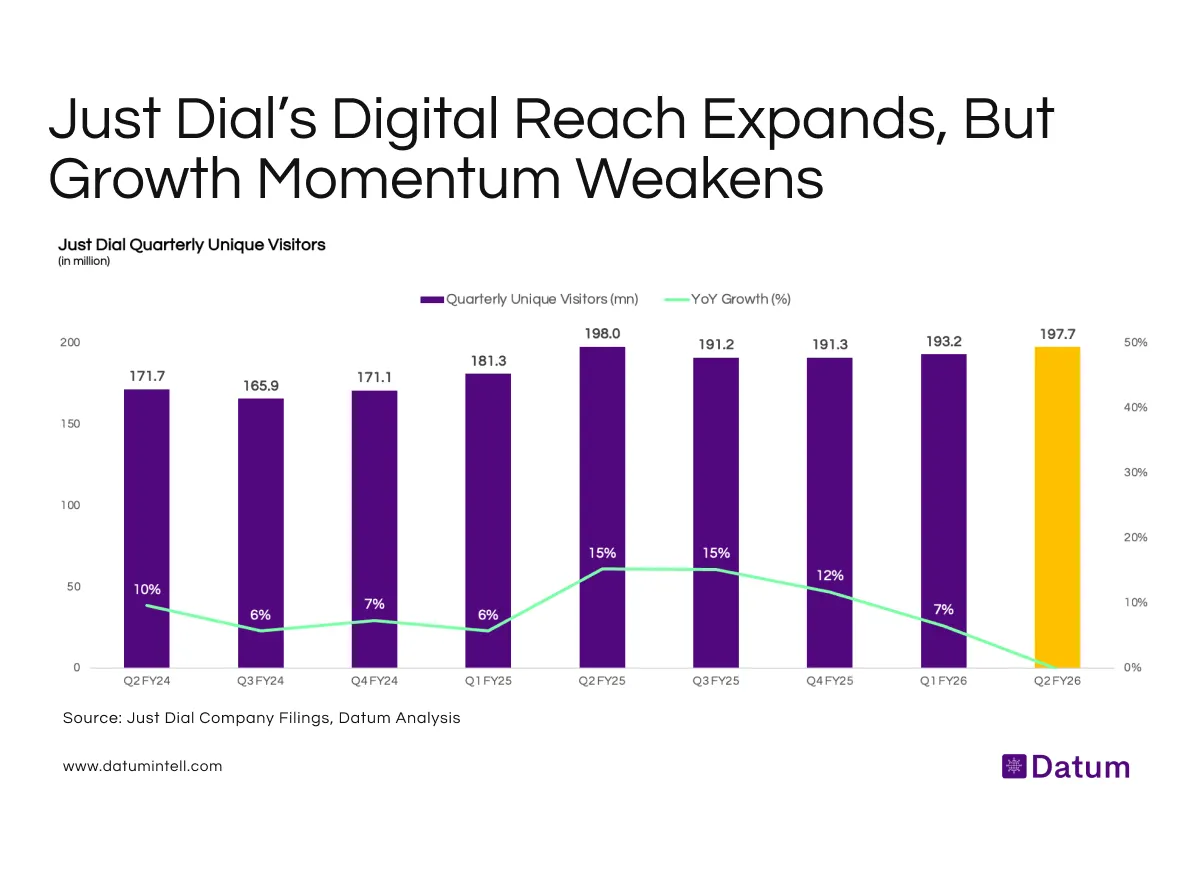
Just Dial’s digital footprint remains wide, but growth has stalled with unique visitors flatlining around 200 million. The data underscores how the platform faces a mature market where retaining attention may be easier than expanding reach.
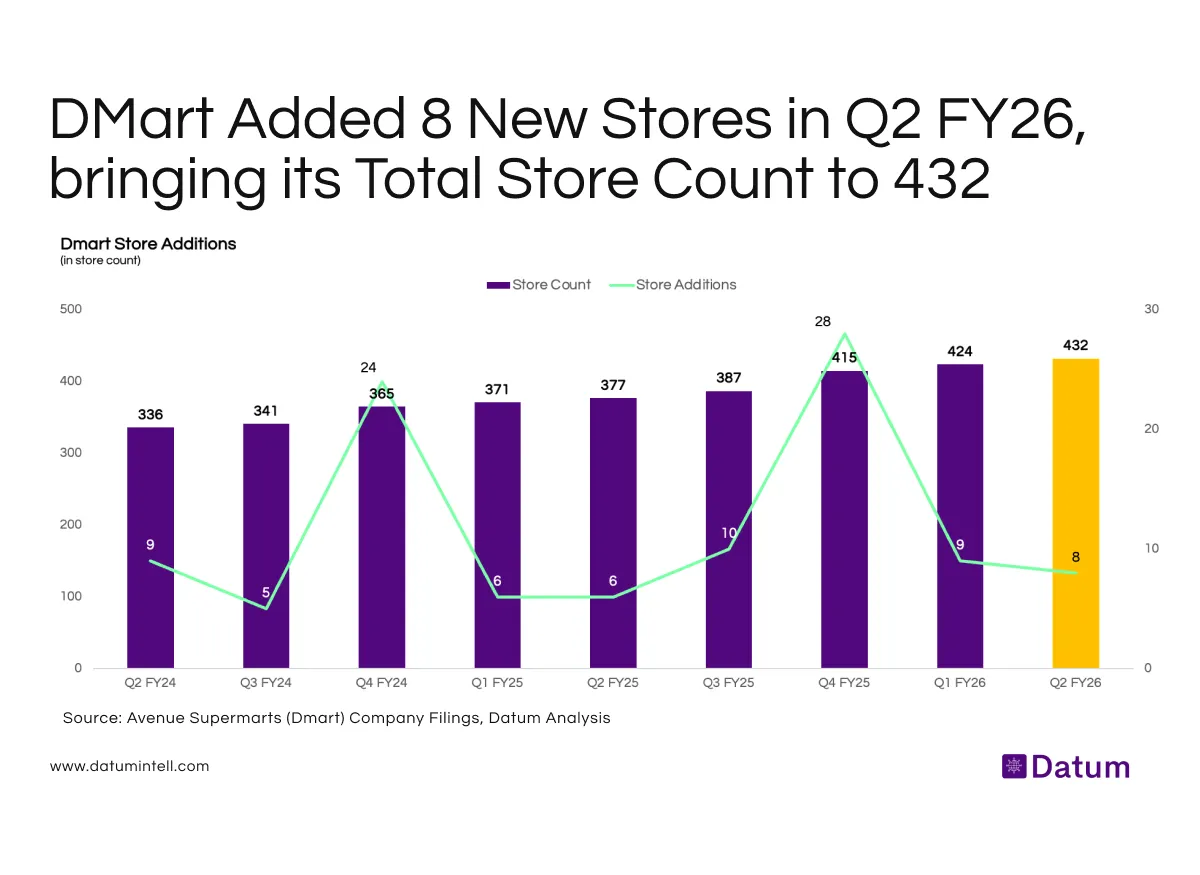
DMart’s store expansion slows as focus shifts to operational efficiency
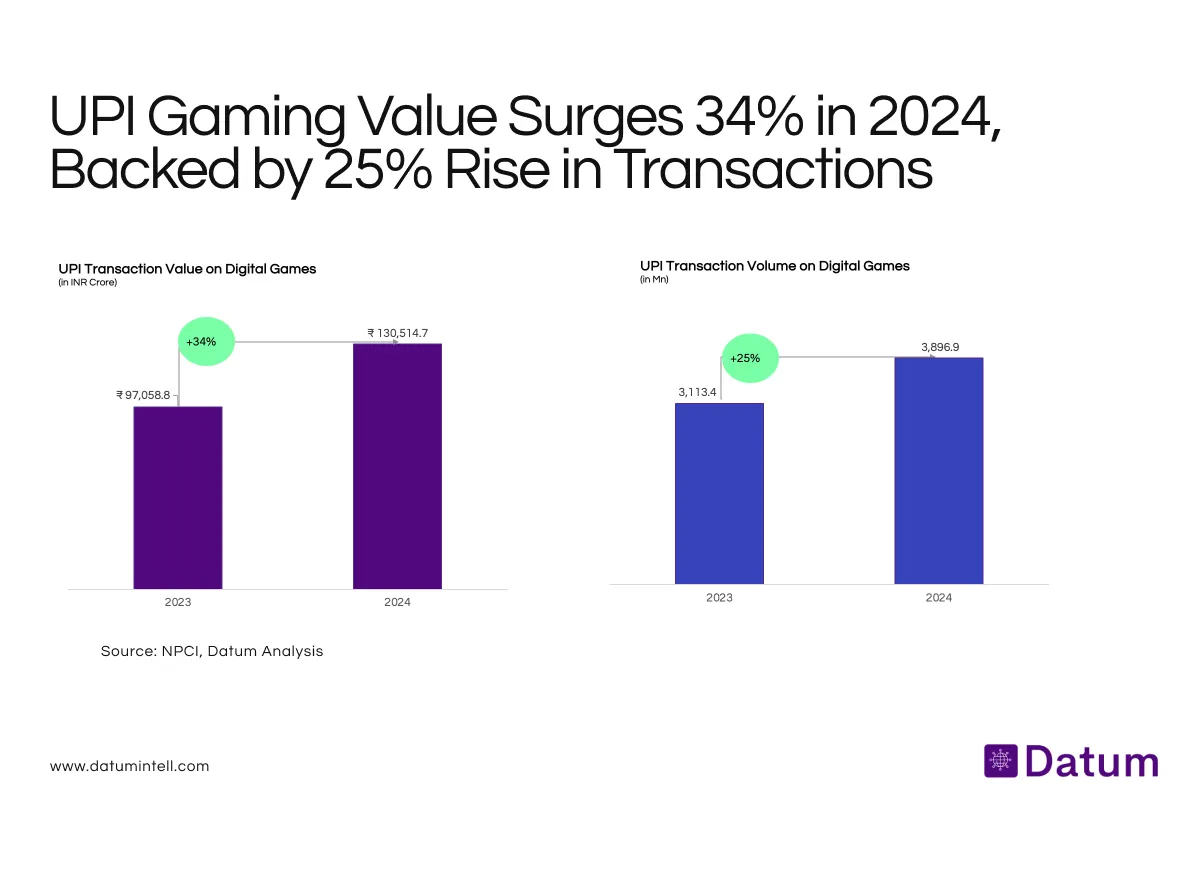
India’s UPI-fueled gaming boom continued in 2024 total spends jumped 34%, with transactions up 25% year-on-year to reach nearly ₹1.3 lakh crore.
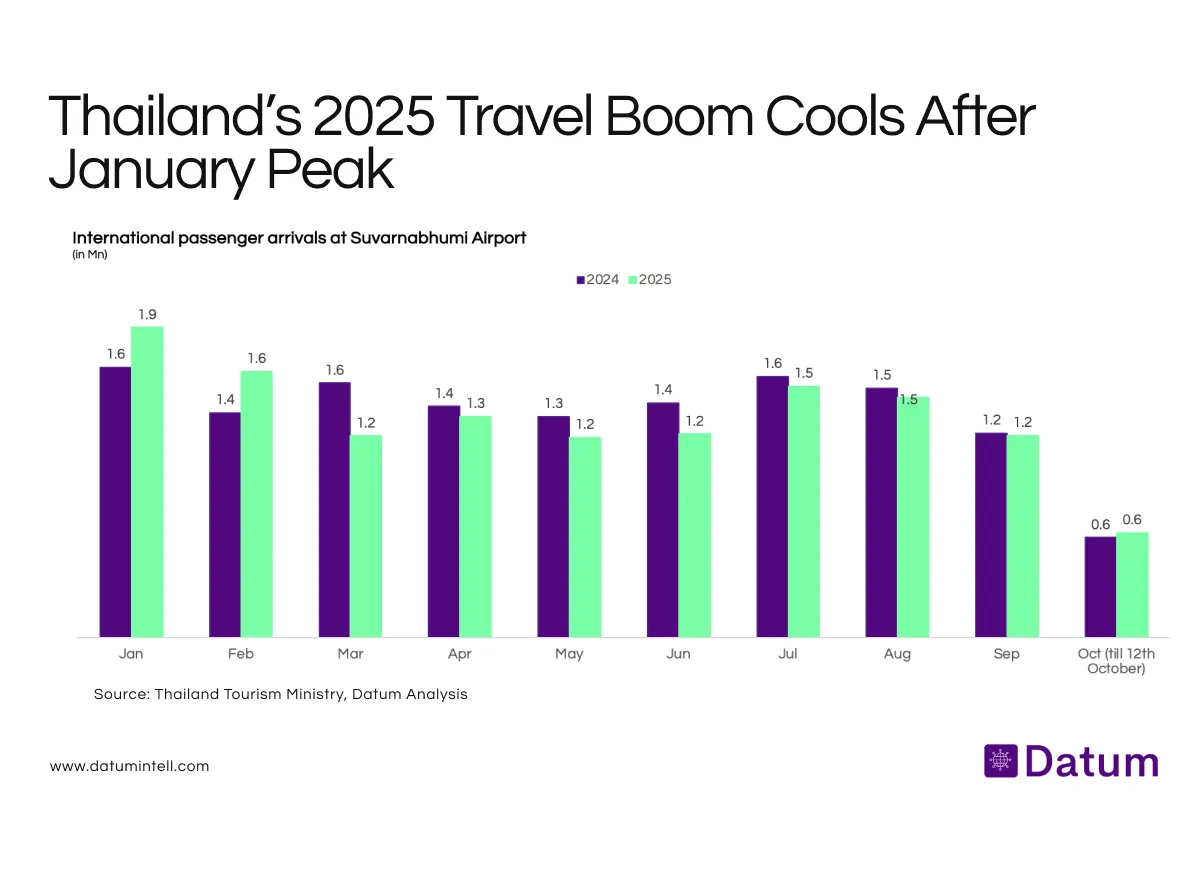
Thailand’s inbound travel boom has hit turbulence. After a strong start to 2025, international arrivals at Suvarnabhumi Airport fell from 1.9M in January to 1.2M by September, reflecting softer China demand, high airfares, and a cooling tourism recovery.
Between Jan 2023 and Aug 2025, Indians spent over ₹3 lakh crore on digital gaming via UPI. Fueled by IPL, fantasy sports, and real-money play, payments surged through 2024 before stabilizing post-regulation -revealing India’s growing digital spending appetite.
DMart’s Q2 FY26 marks a shift from rapid expansion to operational stability, with 15% YoY revenue growth led by food and essentials (58% of sales). The focus now is on efficiency, category mix, and sustaining profitability in a normalized demand cycle.
India’s 2025 festive season opened with a strong start, driven by front-loaded sales, GST-driven price cuts, and the growing role of quick commerce. In the first week alone, platforms generated ~₹60,700 crore GMV - up 29% YoY -capturing over half of the season’s projected ₹1.2-lakh-crore sales.
Trent’s Burnt Toast is a youth-focused fashion brand positioned between Zudio and Zara, targeting Gen Z with trend-led, affordable styles. After debuting in Bengaluru, it has expanded to Pune, marking its role as Trent’s next growth pillar